

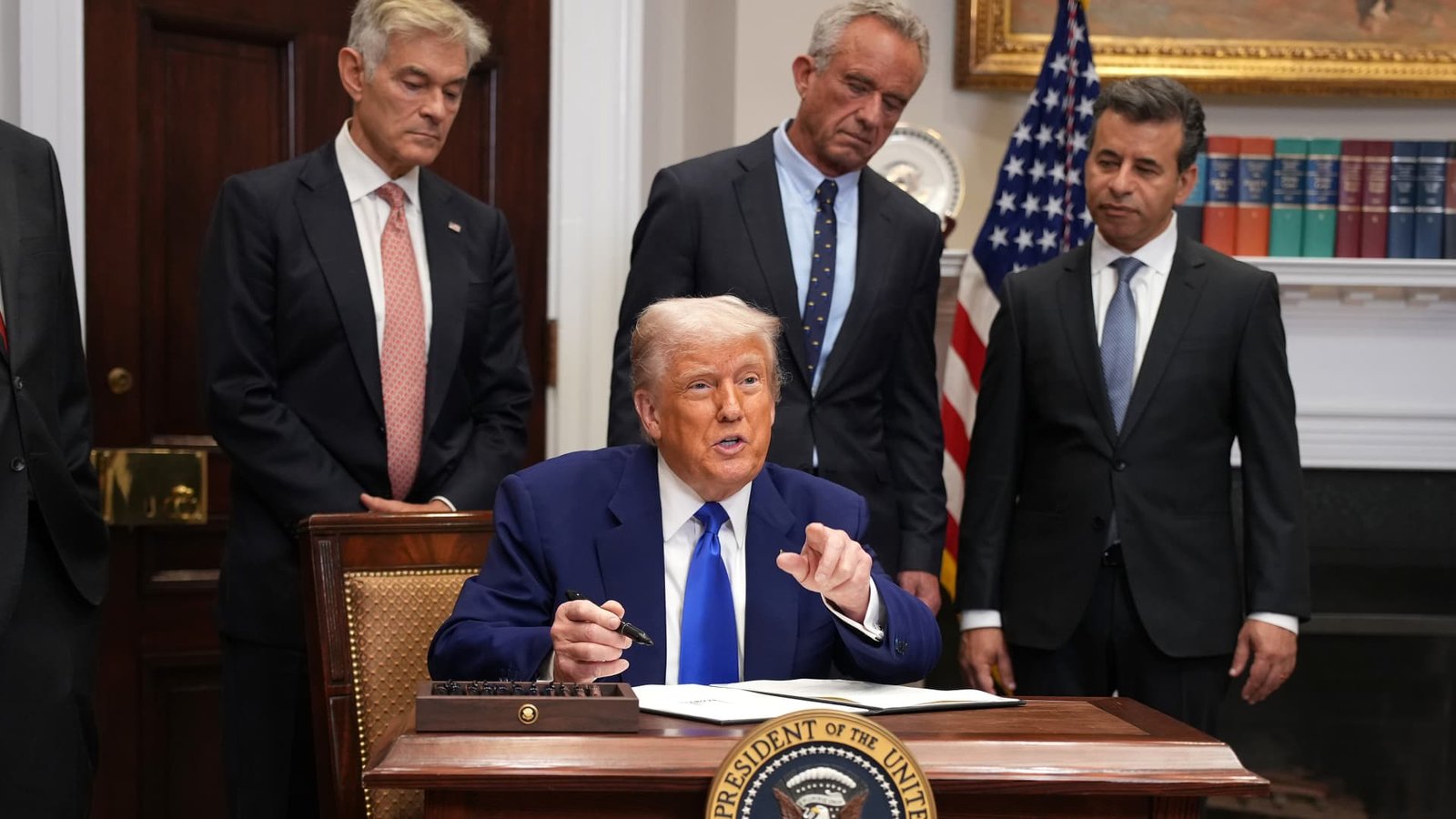
President Trump will reveal new deals to lower prescription drug costs, the White House announced Thursday. Drug companies are starting to offer lower prices on some common medicines.
The announcement is set for Friday at 1 p.m. ET at the White House. It’s the latest move in the administration’s push to get drug companies to charge the same prices in the U.S. as in other rich countries.
AbbVie, Bristol Myers Squibb, Gilead Sciences, and Merck are among the big drug companies expected to share plans to lower prices on certain drugs, according to sources. Bloomberg News reported earlier in the week that Novartis and Roche, both Swiss drugmakers, are also expected to be involved. Reuters had already said AbbVie would participate.
In July, Trump wrote to the heads of 17 major drug companies, telling them to use most-favored-nation pricing for Medicaid, the government’s health program for low-income people. He also wanted them to promise that new drugs would not cost more than in other wealthy countries. So far, Pfizer, Eli Lilly, AstraZeneca, Novo Nordisk, and EMD Serono (the U.S. part of Germany’s Merck KGaA) have agreed to cut prices with the government.
The remaining companies, including Sanofi, Regeneron, Merck, Johnson & Johnson, AbbVie, Amgen, Gilead, Boehringer Ingelheim, Bristol Myers, GSK, Novartis, and Genentech (Roche’s U.S. unit), are still in discussions. Bristol Myers, Gilead, and the White House haven’t commented. AbbVie and Merck aren’t saying anything.
Novartis said they are talking with the administration and want to find ways to lower costs for U.S. patients. Roche said they support Trump’s goal to cut drug prices and want global health systems to keep supporting drug research.
The President has often discussed how much more prescription drugs cost in the U.S. compared to other countries. Other rich countries usually have government-run health systems that negotiate big price drops. But Americans still pay some of the highest prices in the world for prescription drugs.
Investors were worried about the U.S. government controlling drug prices, but they’re less concerned now. The deals so far don’t seem as bad as they thought. Analysts noted that Medicaid accounts for about 10% of U.S. drug spending and already receives significant discounts, sometimes exceeding 80%.
Pfizer said on Tuesday that the Medicaid discount plans will likely put pressure on prices and profits next year.
The White House announcement should put more pressure on the drug industry. It also shows the administration wants to speed up drug pricing changes before the 2026 policy cycle. For people struggling with rising medical bills, these price cuts could be significant. But analysts say it depends on how many companies agree and how big the cuts are.

