

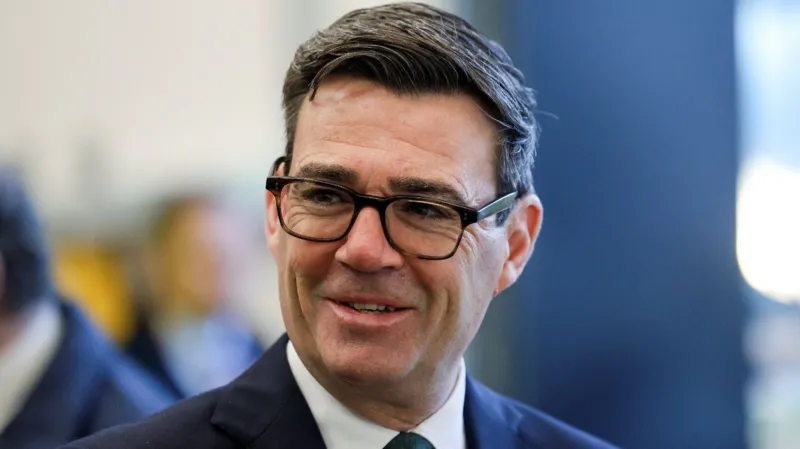
The UK government has moved to clarify Prime Minister Andy Burnham’s remarks about a possible referendum on restoring freedom of movement with the European Union, stressing that no decision has been made on the issue.
The clarification followed questions from broadcasters about whether Burnham would hold a referendum before allowing EU citizens to move freely to the UK again. Asked whether he could introduce freedom of movement without a public vote, the prime minister replied, “no”.
However, Downing Street later sought to distance the government from the suggestion that a referendum was being proposed, saying the prime minister was not committing to any particular option.
His deputy spokesperson said the government would not “get ahead” of the process for consulting the public.
“The prime minister isn’t proposing a return to freedom of movement or any option,” the spokesperson said, adding that Burnham was “not leaning either way” and wanted the British public to have a conversation about the country’s future relationship with the EU.
The spokesperson also said Burnham believed the current Brexit deal was not good enough.
In an interview with The Sunday Times, Burnham said he would welcome an “honest discussion” about the possibility of restoring freedom of movement between the UK and the EU.
He has argued that migration patterns have changed since Brexit, with more people arriving in the UK to settle permanently.
By contrast, he suggested that before Brexit, migration from EU countries often involved younger people who came to the UK for a few years before returning home.
Despite opening the door to a discussion about closer ties, Burnham has ruled out major changes to the UK’s relationship with the EU before the next general election.
He has also maintained that his government remains committed to Labour’s 2024 election manifesto, which ruled out restoring freedom of movement, rejoining the EU single market or entering a customs union.
The prime minister has previously said any significant changes would require a mandate at a general election, which must take place by 2029.
His latest comments have nevertheless reignited debate over whether the UK could eventually reconsider aspects of its post-Brexit relationship with Europe.
Freedom of movement allows citizens of EU member states to travel, live, study and work in other member countries under the bloc’s rules.
It is one of the conditions associated with membership of the EU single market, which enables the free movement of goods, services, capital and people while requiring participating countries to follow many common rules and standards.
The issue was central to the 2016 Brexit referendum campaign, when supporters of leaving the EU argued that freedom of movement limited the UK’s ability to control immigration.
Restoring the arrangement would therefore represent a significant change in the UK’s post-Brexit settlement.
However, Burnham has said he could not envisage recommending that the UK join the euro or the Schengen area.
The Schengen Agreement allows passport-free travel across participating European countries. The UK was not part of Schengen when it was an EU member and retained the pound rather than adopting the euro.
Burnham has argued that Brexit left the UK without certain arrangements that previously helped it manage migration.
Speaking to broadcasters, he cited the small boats crisis, saying the UK had lost a returns agreement that enabled cooperation with other countries to return people who had arrived in Britain.
He argued that the situation had developed over the past decade and that the country’s relationship with European partners needed to be examined.
His comments have added another dimension to the debate over immigration, which remains a politically sensitive issue in the UK.
However, the prime minister has not announced a policy to restore freedom of movement, and Downing Street has stressed that no decision has been made about the options under consideration.
Burnham’s remarks have drawn attention from opposition parties, several of which have firmly rejected the prospect of restoring freedom of movement.
Conservative leader Kemi Badenoch argued that many people voted to leave the EU because they opposed the arrangement.
Reform UK leader Nigel Farage described a return to freedom of movement as “a total betrayal of Brexit Britain”.
Farage also called for the issue to be put to voters at a general election, warning that the prime minister should not agree to changes during his planned visit to Brussels on 20 November without first securing an electoral mandate.
The Liberal Democrats, by contrast, have argued that allowing freedom of movement could help stimulate economic growth.
The contrasting positions illustrate the continuing divisions over Brexit, particularly the balance between immigration control, economic opportunity and closer cooperation with European countries.
The government is now attempting to distinguish between discussing possible future arrangements with the EU and committing to a specific policy.
Burnham has said he does not want to move ahead of public opinion on Brexit, while Downing Street insists that he has not endorsed a return to freedom of movement or any other particular option.
The clarification suggests that the government wants to keep a conversation about the UK’s future relationship with Europe open without making a commitment that could reignite political divisions.
With the next general election due by 2029, the question of how far Britain should seek closer ties with the EU could remain a significant issue in the years ahead.
For now, the government has not announced plans for a referendum on freedom of movement, and the prime minister’s comments remain part of a wider discussion about the future of Brexit.

