

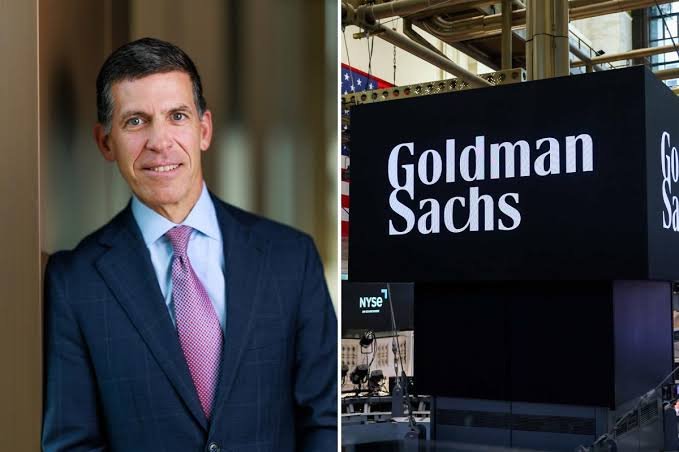
John Waldron has spent nearly three decades at Goldman Sachs, rising through its investment banking ranks to become president and chief operating officer.
The 57-year-old executive is now at the center of reports about Goldman Sachs’ leadership succession. The bank is reportedly considering a plan that could see Waldron replace CEO David Solomon as early as 2027 or 2028.
While no final transition has been announced, Waldron’s long career at Goldman and close working relationship with Solomon have made him a prominent figure in the bank’s succession planning.
Waldron grew up in Cleveland, Ohio, before his family moved to Philadelphia when he was 15. He later earned a bachelor’s degree from Middlebury College in Vermont.
Waldron has spoken about how his early experience as a youth athlete influenced his approach to work, particularly the importance of discipline, feedback and steadily improving areas of weakness.
His entry into finance was not immediate. After spending part of his early career at Bear Stearns, Waldron joined Goldman Sachs in 2000.
He has said the bank initially rejected him after he performed poorly on a financial modeling test, citing weaknesses in mathematics and accounting. He eventually joined the firm and built a career within its investment banking operations.
Waldron held a series of increasingly senior positions at Goldman.
He became co-head of leveraged finance and later served as global co-head of the financial sponsors group between 2007 and 2009. From 2009 to 2014, he led investment banking services and client coverage.
In 2014, Waldron became co-head of Goldman’s investment banking division, a position he held until October 2018.
That same month, Solomon became Goldman Sachs CEO and Waldron was appointed president and chief operating officer.
Waldron’s rise has closely tracked Solomon’s tenure at the bank.
In January 2025, Goldman awarded both executives $80 million in restricted-stock retention awards, with the grants structured to vest over five years.
A month later, Waldron joined Goldman Sachs’ board of directors, further strengthening his position within the firm’s leadership structure.
Waldron was also reportedly approached by alternative asset manager Apollo but declined the opportunity.
Goldman analysts and industry observers have linked Waldron closely to the firm’s current strategic direction, with expectations that he would continue rather than radically change the approach developed during Solomon’s tenure.
As COO, Waldron has been responsible for operational execution and efficiency initiatives across the firm.
One of the major projects associated with him is “OneGS 3.0,” an AI-focused transformation program introduced in late 2025. The initiative aims to use automation to improve productivity, resilience and profitability while limiting growth in the firm’s workforce.
Waldron also co-chairs Goldman Sachs’ firmwide enterprise risk committee, giving him responsibility for overseeing a broad range of financial and nonfinancial risks.
His management style has been described as highly structured. Waldron has said he uses different colors on his calendar to separate professional commitments from family time.
He is married and has six children.
Waldron’s professional activities extend beyond the bank.
He chairs the International Advisory Board of the Atlantic Council and serves on the board of the US-China Business Council.
He is also a board member of the Cleveland Clinic and the Lincoln Center for the Performing Arts. In addition, he serves as a trustee of Middlebury College, his alma mater.
With a career spanning almost 30 years at Goldman Sachs, Waldron has held senior positions across investment banking, operations and risk management. His current role and position on the board have placed him at the center of the bank’s reported succession discussions.

