

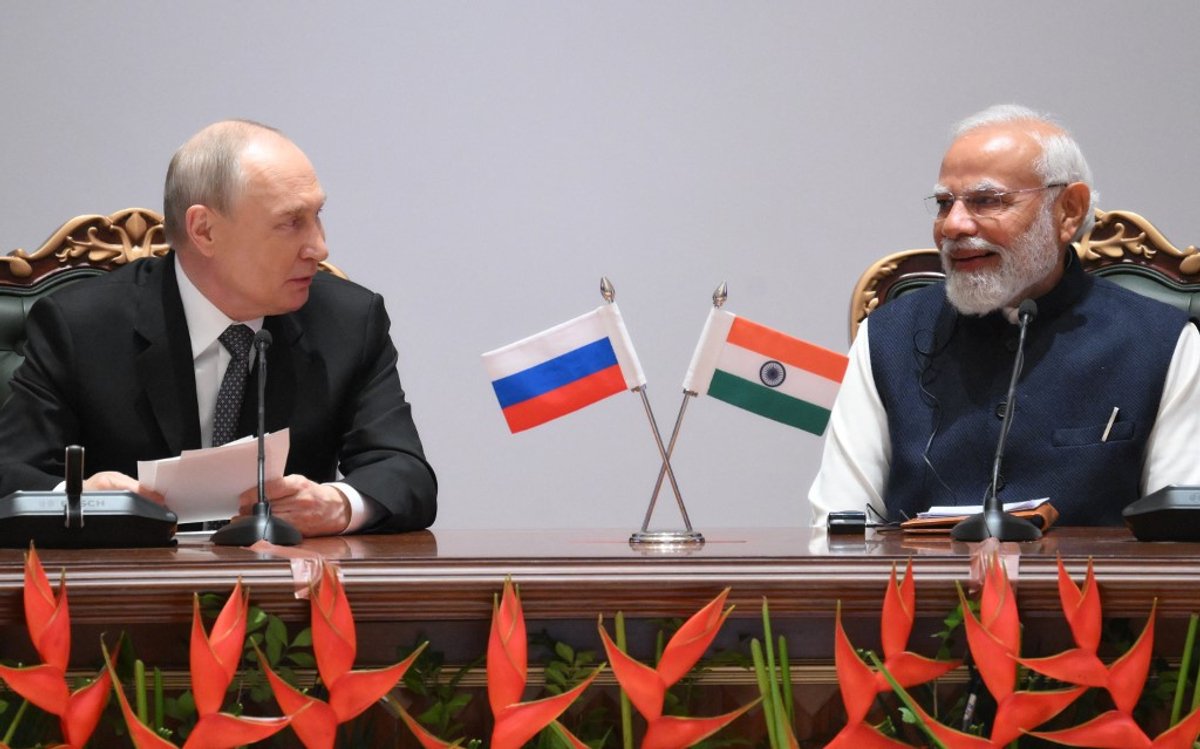
Russian President Vladimir Putin has made a visit to Delhi, where he is paying a two-day visit to the country and was gladly welcomed by Prime Minister Narendra Modi before their annual summit. The visit is likely to yield a number of economic and defense deals, and it follows as the US coerces India to reduce oil imports with Russia. It is also concurrent with the current US-Russia-Ukraine discussions on the termination of the war.
There is a long-standing acquaintance between India and Russia, and Putin and Modi are personally friendly. To Moscow, the large market and rapidly developing economy of India make it a key ally, especially when it comes to the sales of oil, which increased to 35 percent of Indian imports post-invasion of Ukraine compared to 2.5 percent before the invasion due to sanctions that compelled Russia to keep its significant discounts. Washington answered by adding a tariff of 25 percent on Indian merchandise, and India reduced its orders of Russian oil. Putin will be keen to change that trend.
Russia is also interested in increasing its weapons sales to India, both fighter jets and the air defense systems, and it perceives India as the source of skilled labor since Russia experiences workforce issues. Politically, the Kremlin appreciates its relationship with the key powers in Asia in order to demonstrate that it is not alone in the eyes of the West. The same message is strengthened by the fact that Putin has visited China and India.
To India, the visit is quite a test of the so-called strategic autonomy of Modi, who, despite keeping close relations with Russia, tries to reconcile between the US and Europe. Having the US-India relations under stress due to the tariffs and pressure over the issue of Russia, Modi will seek to maintain the relationship with Moscow without compromising on the alliances in the west. Another priority will be trade. In 2025, bilateral trade had surged to 68.7bn with Indian discounted Russian oil purchases making up a large part of the purchases. Yet the balance is extremely tilted in favor of Russia. Since oil imports are now lessened, both parties are likely to seek other prospects, particularly in the defense.
India has been diversifying its military suppliers, although Russian equipment is at the heart of its military forces, such as Sukhoi 30 jets and the S-400 air defense system, which was vital during the short time India was at war with Pakistan earlier this year. India is also said to be interested in hi-tech S-500 systems and Su-57 fighter jets, but Russia is grappling with shortages and delays in deliveries due to sanctions. Modi will tend to demand more definite schedules.
India too desires enhanced access of its products on the Russian market to minimize the reliance on oil and defense. Products such as smartphones, shrimp, and garments are being exported with a low percentage at the moment.
In the case of Modi, his aim is to consolidate the relationship that the country has with Russia; at the same time, space is left open to enhance relationships with the West. Analysts believe that a small success at the summit would ensure cooperation in the areas of oil and defense. An even greater agreement has the potential to transform regional supply chains and trade.

