

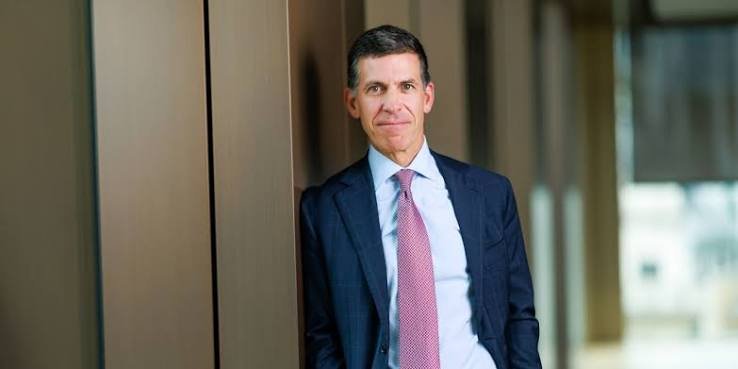
John Waldron has long been viewed as the leading successor to Goldman Sachs CEO David Solomon, but questions remain over when the leadership transition could take place.
The Wall Street Journal reported that Goldman Sachs’ board has discussed a plan for Solomon to step down as chief executive and for Waldron, the bank’s president and chief operating officer, to take over as early as next year.
Goldman Sachs, however, said there is no confirmed timetable for a CEO transition.
“Of course the board regularly discusses succession, as we disclose in our filings, but there is no definitive timeline for succession at Goldman Sachs,” Tony Fratto, the bank’s global head of communications, said. “Any assertions about timing are just speculation.”
Solomon Could Stay Until 2028
Solomon, 64, became Goldman Sachs CEO in October 2018. A source familiar with the matter previously told Reuters that senior employees had expected him to remain in the role for about 10 years, potentially keeping him in the position until 2028.
Goldman shares were down 0.35% in early trading on Monday, slightly underperforming the broader S&P 500. The bank’s stock has roughly quadrupled since Solomon became CEO.
Leadership succession has become an important issue for investors across Wall Street, with similar attention focused on JPMorgan Chase CEO Jamie Dimon and Bank of America chief Brian Moynihan.
Waldron’s Position Strengthened
Waldron, 57, has increasingly emerged as the expected successor to Solomon.
He joined Goldman Sachs in 2000 and became co-head of investment banking in 2014. He has served as president and chief operating officer since October 2018, overseeing the leaders of the bank’s major divisions.
His position was further strengthened last year when he joined Goldman’s board and received a retention award.
Solomon and Waldron were each granted $80 million in restricted stock as part of retention arrangements, with the awards scheduled to vest over five years.
Waldron also turned down an approach from alternative asset manager Apollo in 2024 for a senior position, according to two sources familiar with the matter.
Limited Change Expected Under Waldron
Analysts expect a Waldron-led Goldman Sachs to maintain much of the strategy established under Solomon.
Wells Fargo analyst Mike Mayo said the succession process at Goldman has been unusually visible, with Waldron’s potential elevation increasingly apparent since his retention award last year.
Morningstar banking analyst Sean Dunlop said a Waldron succession would represent a change from some of Goldman’s traditional leadership transitions because both Solomon and Waldron have backgrounds in investment banking.
Dunlop nevertheless expects the bank’s broader strategy to remain largely intact, including continued investment in asset and wealth management, as well as capital-light trading and financing businesses.
Goldman Focuses on Investment Banking and Wealth
Goldman Sachs has spent recent years emphasizing its global banking and markets operations alongside its wealth and asset-management businesses.
The bank reported stronger-than-expected second-quarter profits in 2026 as dealmaking recovered and market volatility contributed to record equities revenue.
Under Solomon, Goldman also significantly reduced its exposure to consumer banking after scaling back the retail-banking expansion it had pursued.
Waldron currently oversees the executives leading the bank’s main business divisions, placing him at the center of Goldman’s operations.
Possible Transition in 2027 or 2028
According to the Wall Street Journal report, discussions have included a possible handover around the end of 2027 or during 2028.
Under the reported proposal, Solomon could remain with Goldman as executive chairman for one to two years after leaving the CEO position.
Any succession plan would still require approval from the bank’s board, and the timing could change.
For now, Goldman Sachs maintains that no definitive timetable has been established, leaving Waldron’s eventual succession widely anticipated but the timing unresolved.

