
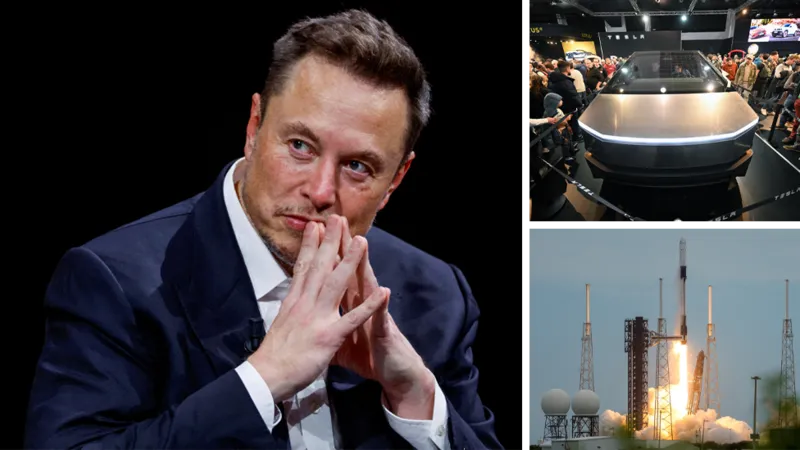
Elon Musk is exploring a potential merger between Tesla and SpaceX, a move that could unite two of his largest technology businesses and create a corporate giant spanning electric vehicles, artificial intelligence (AI), robotics, satellite communications and space exploration.
The billionaire confirmed his interest in the proposal on Tuesday, responding “Yes” when asked whether the companies should merge. However, he emphasised that no agreement had been reached and that the outcome remained uncertain.
Special committees have been established to evaluate the potential transaction. With Tesla valued at approximately $1.5 trillion and SpaceX at $2 trillion, the combined company could be worth around $3.5 trillion, potentially making it the largest merger in corporate history.
Musk said there was significant potential in bringing the businesses together, although the deal would require shareholder approval.
Why Musk Wants to Merge Tesla and SpaceX
The proposed merger reflects Musk’s ambition to integrate his technology ventures and strengthen their capabilities in AI, semiconductor development and advanced infrastructure.
Tesla’s expertise in electric vehicles, autonomous driving and humanoid robotics could complement SpaceX’s operations in rocket development, satellite communications, data centres and telecommunications.
David Nicholson, chief technology adviser at market research firm The Futurum Group, described the potential merger as a logical development in Musk’s broader business strategy.
The unveiling of Tesla’s latest Roadster, featuring rocket-thruster technology associated with SpaceX, has further fuelled speculation about closer cooperation between the two companies.
The merger could also support Musk’s long-term ambition to establish a self-sustaining city on Mars by combining Tesla’s manufacturing and robotics capabilities with SpaceX’s space transportation technology.
Musk has already moved to consolidate his business interests. SpaceX acquired artificial intelligence company xAI and social media platform X, formerly Twitter, as part of a broader strategy to bring his technology operations closer together.
Shareholder Approval Could Prove Challenging
Despite Musk’s enthusiasm, the proposed merger faces significant hurdles, particularly concerning shareholder approval and corporate governance.
Tesla investors would need to support the transaction, with a substantial majority required. Musk himself acknowledged that securing sufficient backing would be a considerable challenge.
Dan Sheehan, an investment analyst at Telos Wealth Advisors, believes shareholders could ultimately support the deal because the companies’ technologies complement one another.
However, he warned that Tesla shareholders could end up owning a smaller stake in a much larger and more complex business.
The transaction would also raise questions about how the combined company should be valued, given the differences between Tesla’s automotive operations and SpaceX’s space and telecommunications businesses.
Following the announcement, SpaceX shares rose 8 per cent in after-hours trading, while Tesla shares gained 2 per cent.
What the Merger Could Mean for Tesla Customers
Tesla customers are unlikely to experience significant immediate changes if the merger proceeds, according to industry experts. Instead, the biggest impact could come from the integration of the companies’ technologies.
Tesla has been shifting its focus towards its best-selling Model Y and Model 3 vehicles while expanding its investment in autonomous driving and robotics. The company has also begun using a manufacturing facility in California to produce its Optimus humanoid robots.
Combining Tesla’s self-driving systems and robotics with SpaceX’s AI capabilities and satellite network could support the development of more advanced vehicles and connected services.
However, analysts have questioned whether cars would remain a central priority within a business increasingly focused on AI infrastructure and space technology.
Tu Le, founder of automotive advisory firm Sino Auto Insights, suggested that incorporating SpaceX technology into future Tesla products could attract additional customers.
The move could also help Tesla strengthen its position in an increasingly competitive electric vehicle market, where Chinese manufacturers such as BYD have expanded their global presence.
How Elon Musk Could Benefit
Musk could emerge as one of the biggest beneficiaries of the proposed transaction, particularly if the merger increases his voting influence over the combined business.
Bringing Tesla and SpaceX together could give him greater control over the allocation of resources and the development of his AI strategy.
Sheehan noted that the merger would not necessarily increase Musk’s wealth immediately but could concentrate more of his existing investments in a single company.
Nevertheless, the proposal could attract regulatory scrutiny because of Musk’s influence across several major technology businesses and the potential implications for competition and corporate governance.
Political developments in the United States could also affect the regulatory environment surrounding the deal.
Tesla shareholders have previously demonstrated their willingness to support Musk’s proposals. Last year, investors approved a controversial compensation package valued at approximately $1 trillion, highlighting his considerable influence within the company.
A Step Towards Colonising Mars
Beyond financial considerations, the merger could advance Musk’s ambition to establish a permanent human presence on Mars.
Combining Tesla’s robotics, manufacturing and autonomous technology with SpaceX’s rockets, satellites and space transportation systems could create an integrated platform for developing the technologies needed for long-term space exploration.
However, significant questions remain over the transaction’s valuation, ownership structure, regulatory implications and the balance between automotive production and space-related investments.
Although the merger remains under consideration, the proposal signals Musk’s continued efforts to consolidate his technology empire, with artificial intelligence, advanced robotics and space exploration likely to play increasingly important roles in his long-term strategy.

