

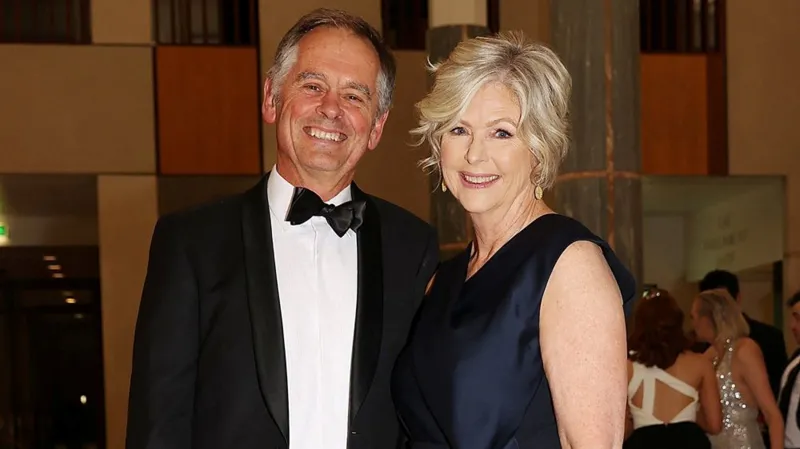
Australian independent MP Helen Haines has lost both legs after being struck by a vehicle in an alleged deliberate attack outside her electorate office in Wangaratta, Victoria, her husband has confirmed.
Phil Haines said his wife suffered severe injuries in the incident but remained in good condition mentally and emotionally. He described the event as “horrendous” and said the most important thing was that she had survived.
“The good news in all this is that she’s alive,” he told reporters at a press conference in Melbourne, where Haines is receiving treatment.
He acknowledged that her recovery would be long and challenging but expressed confidence in her determination, saying she would do her best to recover with the support of her family and loved ones. He also thanked hospital staff and supporters in Australia and abroad, encouraging those wishing to help to donate to Save the Children.
The attack occurred at approximately 15:35 local time on Monday, when a Toyota LandCruiser allegedly driven by 43-year-old Brendan Nugent struck Haines outside her office in Wangaratta, around 240km northeast of Melbourne.
Bystanders reportedly pulled Nugent from the vehicle and detained him shortly after the collision. Haines underwent surgery and initially lost one leg before losing the other by Wednesday morning, according to her husband.
Suspect faces multiple charges
Nugent appeared before Wangaratta Magistrates’ Court on Wednesday, facing three charges: dangerous driving causing serious injury, intentionally causing serious injury, and causing harm to a Commonwealth public official.
He did not apply for bail and is scheduled to return to court in February. Police have indicated that further charges, potentially including attempted murder, could follow.
During the brief hearing, Nugent’s lawyer told the court that his client had mental health concerns without providing further details. The court also heard that he had a rare neurological condition known as idiopathic transverse myelitis, which involves inflammation of the spinal cord.
Court documents also list charges relating to the cultivation and possession of cannabis.
Victoria Police Commissioner Mike Bush said investigators were working to establish the motive behind what authorities believe was a deliberate attack. The investigation is being conducted with support from the Australian Federal Police.
Police said Nugent was not previously known to them as a potential threat, and there had been no intelligence indicating that Haines was in danger before Monday’s incident. Investigators are examining whether drugs or medication played a role and whether any personal relationship existed between the suspect and the MP.
Nugent’s family said they had been friends with Haines for many years and described the incident as “devastating and unfathomable”.
Bystanders helped save the MP
Jacob and Jackie Evans were among the first people to assist Haines after she was struck. According to their accounts, she thanked them while lying severely injured.
Jackie recalled Haines saying, “Thank you, you lovely people,” describing the moment as remarkable given the severity of her injuries.
Jacob used a tourniquet from a medical kit in his car to help control bleeding from one of Haines’s legs.
The incident has shocked Wangaratta and Australia’s wider political community, where acts of political violence remain relatively uncommon. Haines, who represents the regional electorate of Indi, was first elected to parliament in 2019 and is widely respected by colleagues across party lines.
Prime Minister Anthony Albanese said he had spoken with Phil Haines several times since the attack. Speaking to national broadcaster ABC, he also highlighted the distinctive forms of abuse faced by female politicians, including threats of sexual violence.
Police have reported a growing number of threats against senior public officials, with nearly one person a week being charged with related offences.
Attack renews debate over politicians’ security
The incident has prompted renewed questions about security arrangements for Australian federal MPs.
Federal police have said providing individual protection for all 226 federal parliamentarians would require an exceptionally large deployment of personnel. Instead, decisions about personal protection are based on an assessment of each politician’s role and the threats they face.
Governor-General Sam Mostyn, who appeared alongside Phil Haines at the press conference, urged Australians to respond to the tragedy with compassion and reflection.
She called on the community to support those distressed by the attack and to rediscover a commitment to decency.
As Haines begins what her family expects will be a difficult recovery, messages of support have continued to arrive from across Australia’s political spectrum and beyond.

