

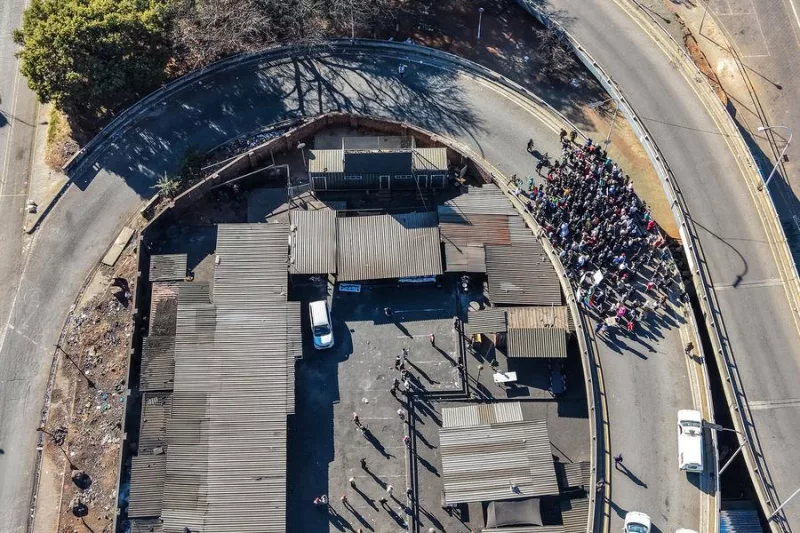
A foreign national has been beaten to death by a crowd of approximately 50 people in Durban, South Africa, as tensions surrounding immigration continue to fuel protests and violence across the country.
Police said the unidentified man, believed to be in his late 30s or early 40s, was initially approached by two men beside a road before a larger group joined the assault. He was pronounced dead at the scene.
Authorities have launched a murder investigation, but the motive for the killing remains unclear.
Robert Netshiunda, a provincial police spokesperson, told the BBC that investigators could not speculate about the circumstances surrounding the attack. Further details would be released once they had been verified.
The killing comes amid a growing wave of anti-immigration demonstrations in South Africa, some of which have escalated into violence against foreign nationals and their businesses.
Anti-immigrant protests fuel growing concerns
Earlier this month, shops and vehicles were set on fire in Durban and Soweto, near Johannesburg, during unrest linked to protests against immigration.
The South African government has called for demonstrations to remain peaceful while acknowledging demands for changes to immigration policy.
Authorities say tens of thousands of foreign nationals have been deported or repatriated since the government began a crackdown earlier this year.
One of the groups involved in the protests, March and March, had previously given undocumented migrants until 30 June to leave the country. Several demonstrations took place before that deadline, amid reports of attacks on people from other African nations.
The developments prompted countries including Nigeria, Zimbabwe and Ghana to consider or take steps to repatriate their citizens amid fears of further violence.
Nigerians and Ghanaians among those affected
The unrest has also triggered diplomatic tensions between South Africa and other African countries.
Nigeria accused South African authorities of responsibility for the deaths of two of its citizens during the violence in June.
Ghana also confirmed the death of one of its nationals, Bashiru Isak, a father of three who was fatally shot in Cape Town during demonstrations targeting foreign nationals.
His death prompted a diplomatic dispute with South Africa, whose authorities argued that the scale of the violence had been exaggerated.
The incidents have intensified concerns about the safety of foreign nationals living and working in South Africa, particularly those from other African countries.
Protest leaders reject accusations of xenophobia
March and March is among the movements calling for stricter immigration enforcement. Its leader, Jacinta Ngobese-Zuma, has rejected accusations that the group is xenophobic.
Speaking to the BBC’s Focus on Africa programme, she argued that protesters were expressing frustration after years of living alongside undocumented migrants.
Her comments reflect a broader debate in South Africa over immigration, employment, crime and access to public services.
However, the protests have drawn criticism as reports of attacks on foreign nationals have emerged, raising concerns that political demands for immigration reform are contributing to hostility towards migrants.
A long history of xenophobic violence
South Africa has experienced xenophobic attacks for nearly two decades.
In 2008, widespread violence against foreign nationals killed more than 60 people and displaced tens of thousands of others.
The latest unrest is unfolding amid persistent poverty, severe economic inequality and unemployment affecting roughly one-third of the workforce.
Foreign nationals are often blamed for taking jobs, contributing to crime and putting pressure on public services. However, researchers say broad claims attributing these problems to migrants are not supported by the available evidence.
Despite its economic challenges, South Africa remains one of the continent’s principal destinations for people seeking employment, security and better opportunities.
The fatal attack in Durban adds to growing concerns about migrant safety as authorities investigate the killing and the country continues to grapple with tensions over immigration.

