

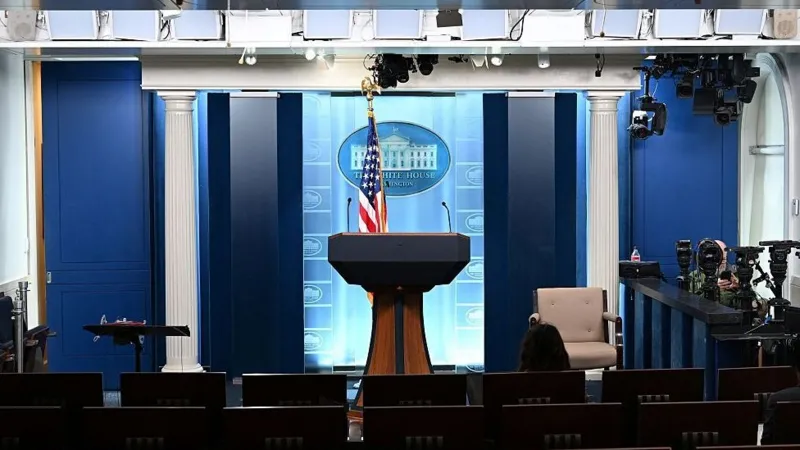
Press freedom organisations are challenging the Trump administration in court over its efforts to restrict access to the White House for selected news outlets, arguing that the policies undermine constitutional protections and deprive the public of important information.
The lawsuit, filed on behalf of six plaintiffs, including journalists, scholars and advocates, claims that the administration’s selective restrictions violate the First Amendment of the US Constitution, which protects freedom of speech and the press.
The plaintiffs are asking a federal court in New York to declare the media bans unconstitutional and prevent the administration from continuing to enforce them.
The legal challenge was brought by the Knight First Amendment Institute and Yale Law School’s Media and Information Access Clinic.
According to the court filings, the restrictions are making it more difficult for the plaintiffs to carry out their work because they depend on information and reporting from the White House press corps.
The lawsuit argues that the policies “deprive the public” of news coverage and create an environment in which journalists reporting on President Donald Trump must worry that critical or unfavourable coverage could lead to the sudden loss of their access.
The plaintiffs contend that the possibility of having credentials revoked could distort reporting from the White House.
The BBC said it had asked the White House for comment.
The lawsuit does not seek financial damages. Instead, the plaintiffs are asking the court to require the defendants to cover their legal fees if they prevail.
Since returning to office in January 2025, Trump has repeatedly clashed with established American news organisations, frequently accusing some outlets of publishing what he calls “fake news”.
The latest lawsuit follows a separate legal battle involving CNN, Politico and MSNOW, whose reporters were barred from the White House last month.
Those outlets challenged the restrictions, arguing that the administration was unlawfully discriminating against them because of the content of their reporting.
Several other media organisations temporarily suspended their participation in pooled coverage of the president in protest.
A federal judge subsequently ordered the White House to restore the affected journalists’ credentials while the case proceeds. The reporters later said they had been allowed back into the White House complex.
However, the administration has continued to restrict certain journalists in specific circumstances, prompting further concerns among media organisations about access and press freedom.
CNN, for example, has threatened additional legal action because its reporters continue to face restrictions on access aboard Air Force One.
Last week, the White House also barred a correspondent from the Independent from covering Trump’s trip to Iowa after the president berated the reporter during a news conference.
The disputes form part of a broader restructuring of the White House press system under Trump’s second administration.
In February, the White House announced that it would take control of the press pool, the small group of journalists responsible for covering the president when access is limited.
For more than a century, the White House Correspondents’ Association had managed the pool.
The administration has also sought to expand access for conservative bloggers, social media influencers and other figures it describes as “new media”, arguing that doing so would introduce a wider range of perspectives into White House coverage.
The changes have raised questions about how journalists are selected, who controls access to the president and whether established media organisations are being treated differently because of their reporting.
The White House’s conflict with the media also extends to the Associated Press.
In February, the administration moved to exclude AP journalists from restricted-access areas, including the Oval Office and Air Force One.
The dispute followed the news agency’s decision to continue using the name “Gulf of Mexico” rather than “Gulf of America”, the terminology preferred by Trump.
The Associated Press filed a lawsuit challenging the restrictions, and that case remains ongoing, according to the BBC report.
The dispute has become another prominent example of the tension between the administration’s approach to official terminology and news organisations’ editorial independence.
The president has also suggested moving the entire White House press corps to another location.
Last week, Trump confirmed on Truth Social that he was considering relocating journalists from the White House grounds, following reports that he was contemplating rebuilding a swimming pool beneath the James S. Brady Press Briefing Room.
“I am thinking about moving the press, and putting them in a different location,” Trump wrote, adding that he wanted to use the existing space for what he described as “very badly needed space”.
The proposal has added another dimension to the wider dispute over the press corps’ access to the president and the facilities used by journalists covering the administration.
The latest legal challenge centres on whether the White House can selectively restrict journalists’ access while continuing to provide information to the public through official briefings and other press activities.
The plaintiffs argue that the restrictions affect more than the individual reporters and organisations involved. They contend that limiting access can reduce the information available to the public and discourage journalists from pursuing critical reporting.
The administration’s broader changes to press access—including its decision to take control of the press pool and admit more independent and conservative media figures—have intensified the debate over how the White House should manage its relationship with journalists.
The outcome of the lawsuit could help clarify the legal limits on the administration’s ability to restrict access to White House reporting opportunities.
For now, the case adds to a series of legal disputes between the Trump administration and major news organisations over press credentials, editorial independence and the role of journalism in holding government officials accountable.

