
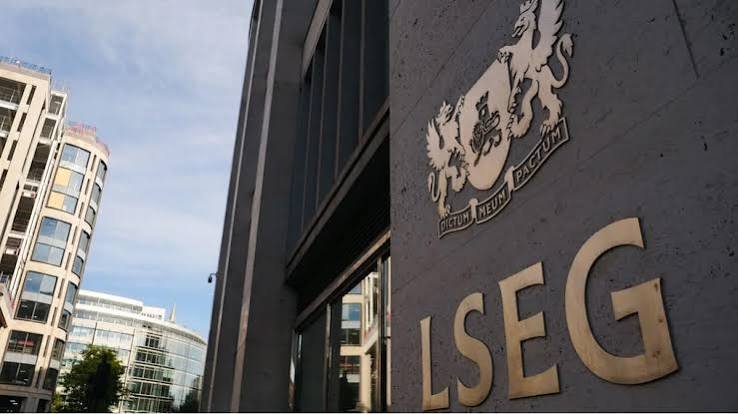
The London Stock Exchange Group (LSEG) has agreed to acquire credit intelligence provider Octus for $3.54 billion, marking its largest acquisition in seven years as the financial data giant seeks to strengthen its position amid growing concerns about artificial intelligence disrupting the industry.
Announced on Thursday, October 22, the deal will expand LSEG’s data and analytics capabilities, particularly across credit and private markets. Chief Executive David Schwimmer said Octus possesses highly specialised proprietary information that large language models would struggle to replicate.
The announcement helped lift LSEG shares by 6%, erasing their losses for the year to date and leaving the stock up approximately 4% in 2026. However, shares remain around 24% below their 2025 peak, reflecting investor concerns that AI could undermine traditional financial data businesses and put pressure on profit margins.
Building a Stronger Position in Financial Data
LSEG operates the London Stock Exchange and holds a majority stake in electronic trading platform Tradeweb. The company has been working to expand its data and analytics services while introducing AI-powered tools and licensing its proprietary information to customers.
The acquisition of Octus is expected to strengthen its fixed-income offerings and broaden its reach in credit and private market intelligence.
Octus employs journalists, analysts and legal specialists who provide detailed information about credit markets, particularly companies experiencing financial distress. Its research and intelligence services are used by banks, investors and other financial professionals.
LSEG said Octus’s products and customer base complement its existing fixed-income business. The company expects the acquisition to have a neutral effect on adjusted earnings in the first full year after completion, with earnings benefits anticipated thereafter.
Chief Financial Officer Michel-Alain Proch said Octus is expected to contribute between $300 million and $320 million in revenue this year.
The acquisition will be financed through external debt.
AI Concerns Drive Strategic Shift
The deal comes as financial information providers face growing questions about whether AI tools could make their products less valuable by allowing customers to access and analyse information more cheaply.
LSEG is attempting to turn that challenge into an opportunity by developing AI applications and making its proprietary data available for use in emerging technologies.
Schwimmer said the company was already seeing strong adoption of its AI offerings and meaningful signs of monetisation, adding that he expected the trend to continue.
The Octus purchase reflects the growing importance of specialised, difficult-to-replicate information in a market where general-purpose AI models can increasingly process large volumes of publicly available data.
LSEG has also faced pressure from activist investor Elliott Investment Management, which disclosed a stake in the company in February and has reportedly pushed for changes to its portfolio. Elliott did not respond to a request for comment on the acquisition.
LSEG has previously described its discussions with the investor as constructive.
A Major Acquisition Following the Refinitiv Deal
The Octus transaction is LSEG’s largest acquisition since its $27 billion agreement to buy financial data provider Refinitiv in 2019 from Thomson Reuters.
That deal helped transform LSEG into both a major distributor and producer of financial market information.
The latest acquisition also follows a separate move by Tradeweb Markets, which announced plans earlier in the week to acquire bond-trading platform Trumid for nearly $2 billion.
Schwimmer said LSEG had examined numerous potential acquisitions over the past five years, but only a small number met its strategic and financial criteria. He said the Octus and Trumid transactions offered both strategic advantages and attractive financial returns.
LSEG Raises Its 2026 Financial Outlook
Alongside the acquisition announcement, LSEG upgraded its full-year financial guidance following a stronger-than-expected third-quarter performance.
The company now expects organic total income, excluding recoveries, to grow by at least 8% in 2026 at constant exchange rates. Its previous forecast was growth of between 7% and 7.5%.
LSEG also expects to complete its current share repurchase programme by February 2027. It said it could undertake an additional £1 billion to £1.5 billion in share buybacks next year, equivalent to approximately $1.34 billion to $2.01 billion.
Analysts at JPMorgan described the quarterly performance and improved guidance positively, noting that the potential for additional buybacks could be well received despite the planned acquisitions.
Morgan Stanley advised LSEG on the Octus transaction, while Evercore and Goldman Sachs advised Octus shareholders, including majority owner Permira.
The Road Ahead
The Octus acquisition signals LSEG’s determination to reinforce its competitive position as AI reshapes financial research, data distribution and investment decision-making.
By adding specialised credit intelligence to its existing information services, the group hopes to provide customers with data and analysis that remain valuable even as AI tools become more sophisticated.
The deal’s long-term success will depend on LSEG’s ability to integrate Octus, realise the expected financial benefits and continue adapting its business model to the changing demands of financial markets.

