

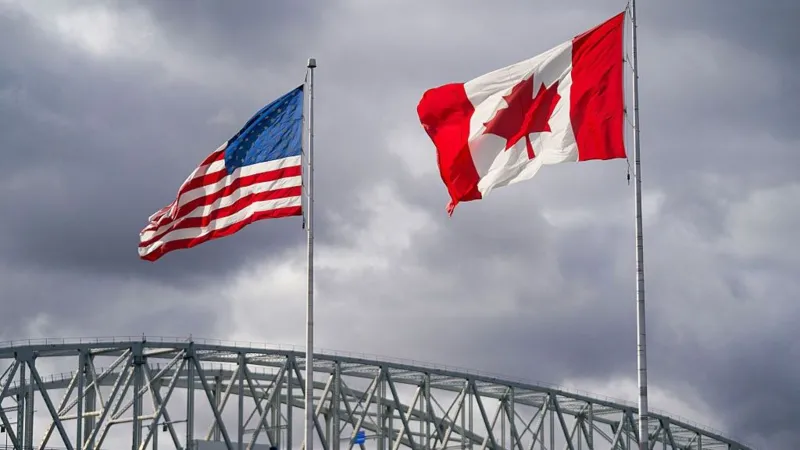
The White House has announced that the United States will remove tariffs on certain Canadian goods beginning October 30, offering potential relief to businesses affected by the escalating trade dispute between the two countries.
The exemptions will cover selected products, including plywood sheets, paper products, machinery, refrigeration equipment, and packaging materials. The White House said the changes form part of President Donald Trump’s efforts to protect American workers, promote fair trade and address what it describes as discriminatory Canadian trade practices.
The move comes just days before the November 3 US midterm elections, with economic pressures and affordability among the major concerns for voters. The exemptions could also provide a political boost to Republican candidates in states whose economies depend heavily on cross-border trade.
Susan Collins Announces Tariff Relief for Maine Industries
Republican Senator Susan Collins, who is fighting to retain her Senate seat in Maine, announced the tariff exemptions before the White House confirmed the decision.
Collins said she had worked with the administration to secure relief for products important to Maine’s agricultural sector, including those used by blueberry, potato, apple and seaweed producers.
She explained that many farmers and growers rely on specialised Canadian equipment, packaging materials and other supplies that are either unavailable from American manufacturers or expensive to replace.
Collins, who is seeking a sixth term, said she had also urged US officials to pursue further exemptions and work towards a broader trade agreement with Canada.
Maine’s economy is closely connected to its northern neighbour, and the ongoing tariff dispute has placed additional pressure on businesses that depend on cross-border supply chains.
The Wall Street Journal reported that the tariff exemptions, which largely focus on Canadian agricultural and forestry products, were intended in part to help Collins and other Republicans ahead of the midterm elections. The report also suggested that reductions on selected goods could be offset by higher tariffs on other Canadian imports.
Trade War Continues Despite Signs of Negotiation
The United States and Canada entered an escalating tariff dispute after trade negotiations broke down over the summer. The measures have affected businesses on both sides of the border.
On Friday, Trump said Canada was “working very hard” to reach a trade agreement with Washington.
Canadian Prime Minister Mark Carney said his government remained open to a mutually beneficial deal but was prepared to wait for an acceptable agreement rather than rush into one.
According to CBC, Carney said Canada could sign an agreement quickly if the United States were ready, but would also be willing to wait months or longer, even until another administration, if necessary.
Canada’s internal trade minister, Dominic LeBlanc, confirmed that a delegation had met members of the Canada-United States Economic Relations Advisory Committee on Thursday. It was the committee’s ninth meeting since April 2026, with discussions focused on the continuing effects of US tariffs on Canada.
As of Friday, the Canadian government had not publicly responded to the White House’s announcement of the new exemptions.
Border States Feel the Economic Impact
The tariff dispute has created challenges for businesses and industries across states with strong commercial ties to Canada.
In Maine, agricultural producers depend on Canadian supplies and specialised equipment, while other border states have also experienced economic pressure from the trade restrictions.
Republican Mike Rogers, a lawmaker from Michigan, has called on Trump to end the standoff after previously supporting the administration’s trade policy in campaign advertisements in the state.
The political stakes are significant as Republicans prepare to defend their congressional majorities in the midterm elections. Voters’ concerns about rising costs and economic uncertainty have made trade policy an increasingly important issue in competitive races.
More Relief or a Broader Agreement?
The White House said the tariff changes reflect the administration’s commitment to protecting American workers and addressing what it considers unfair treatment of US commerce by Canada.
However, it remains unclear whether the exemptions will lead to a broader easing of trade restrictions or whether tariffs on other Canadian products will rise to offset the reductions.
For businesses on both sides of the border, the immediate changes could lower costs for selected supplies and equipment. But without a wider agreement, uncertainty over tariffs is likely to continue affecting investment, sourcing decisions and cross-border trade.
With the November 3 elections approaching, the decision also highlights the intersection of trade policy and domestic politics, as the administration faces pressure to demonstrate that its approach is delivering economic benefits to American voters.

