

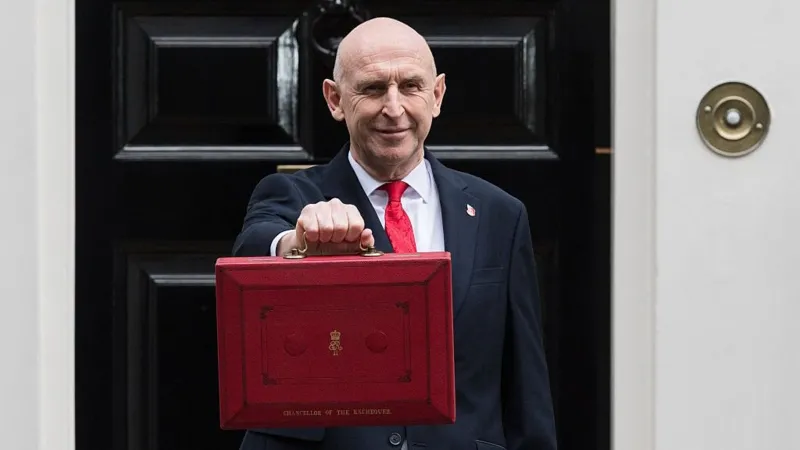
Chancellor John Healey’s first Budget has been characterised by a series of relatively small measures rather than major changes to taxation and public spending.
The 150-page Budget document, alongside the Office for Budget Responsibility’s economic and fiscal forecasts, outlines 98 separate measures. That is considerably more than usual and exceeds the number included in either of Rachel Reeves’ previous budgets. However, most are expected to have a limited impact on the government’s finances.
The scale of the announcements helps explain the mixed reaction ahead of the Budget. Government officials had been frustrated by suggestions that Healey would have little to announce, yet critics may argue that the overall package remains modest compared with several recent Budgets.
There are measures intended to help households and businesses, alongside higher taxes on savings, rental income and banks. The government hopes these announcements will offer tangible benefits to the public, although some affected groups are likely to oppose the changes.
Labour has pledged not to increase income tax, National Insurance or VAT, three major sources of government revenue. As a result, ministers seeking additional tax revenue have looked towards other areas, potentially exposing particular industries and groups to greater financial pressure.
Previous tax changes have demonstrated the political risks involved. Rachel Reeves’ proposed inheritance tax changes, for example, prompted strong opposition from many farmers.
Healey faces a difficult economic backdrop, with pressure on government finances coinciding with the financial struggles of many households. The OBR described the UK’s economic and fiscal position as “very challenging” and pointed to further adverse developments during the year, including the conflict in the Middle East.
The outlook remains uncertain. The watchdog warned that economic and public-finance outcomes could be significantly better or worse than expected, with broadly equal probabilities.
Although the Budget presents the UK economy as showing signs of resilience, national debt, the tax burden, inflation and interest rates remain significant concerns. Further international shocks could make the situation more difficult.
Uncertainty surrounding developments in the Middle East, as well as political events in the United States and Israel, could also affect the economic outlook.
These constraints have limited the chancellor’s room for manoeuvre. Even expensive interventions may only soften the effects of difficult economic conditions rather than deliver improvements that households can readily feel.
While reducing the severity of financial pressures can be a worthwhile political objective, it requires public money and may not necessarily translate into an immediate political reward.
Instead, the government is relying on a collection of smaller announcements that it hopes its MPs can present to voters as evidence of progress.
Luke Tryl, UK director of the More in Common think tank, said the Budget’s relatively populist approach could be well received. He pointed to measures targeting banks, landlords, gambling companies and vape shops, alongside support for living costs, business rates relief and protection for pensioners from income tax.
Tryl also argued that the government had avoided a potential political problem by extending energy support to households in council tax bands A to D, rather than restricting assistance to people receiving benefits. This could help reassure working households who feel they are under financial pressure but receive little direct support.
Opposition parties, approaching the Budget from different political positions, have criticised the package as lacking substance.
The government, however, presents the Budget as part of a broader programme being developed by the prime minister and chancellor. Other elements include plans to help young people into work, reduce benefits before Christmas, define the UK’s long-term relationship with the European Union and establish a 10-year vision under Andy Burnham.
Overall, the Budget appears to be a cautious attempt to provide targeted assistance without making sweeping changes. One government ally described it as a “Mr Sensible Budget”, suggesting that its restrained approach might avoid major surprises and future financial problems.
Whether that caution proves effective will depend on how the measures affect households and businesses, and whether the government can make progress against the wider economic challenges facing the country.

