

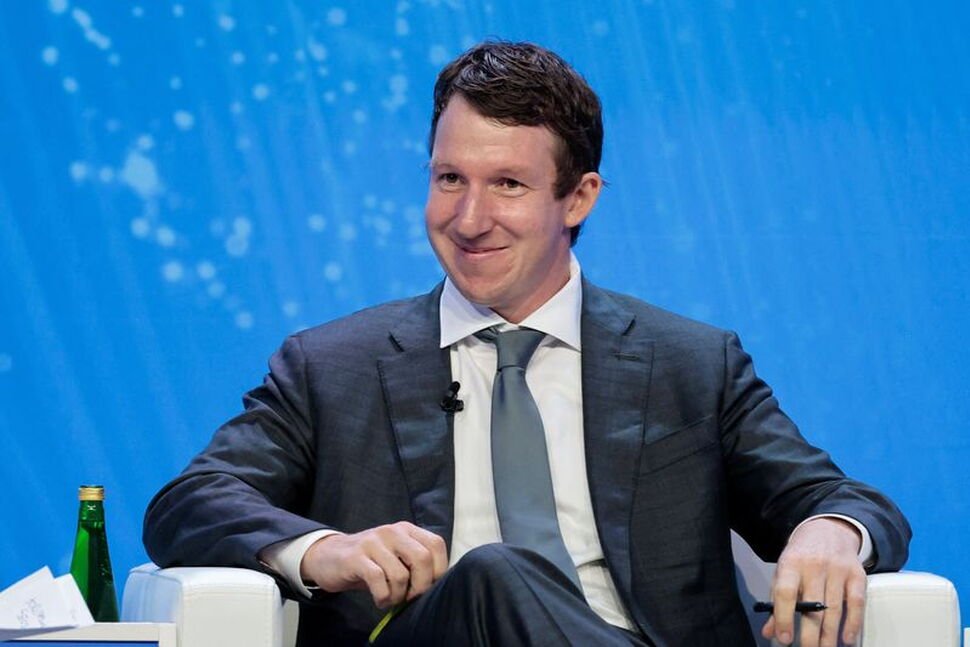
Artificial intelligence could significantly accelerate economic growth in the United States, potentially lifting gross domestic product (GDP) to $44 trillion by 2030 under certain conditions, Anthropic co-founder Jack Clark said, while warning that governments have a narrowing window to establish safeguards against the technology’s risks.
Speaking at the International Monetary Fund and World Bank annual meetings in Bangkok on Saturday, October 17, Clark said rapidly advancing AI capabilities could reshape industries, speed up scientific discovery and generate substantial economic opportunities. However, he stressed that international cooperation and stronger oversight would be essential to manage the technology’s growing influence.
AI Could Drive a Major Economic Expansion
Clark cited an internal Anthropic model that projected US GDP could reach approximately $44 trillion by 2030 if AI continues to improve at its current pace and enables significant breakthroughs across the economy.
The projection compares with current US economic output of just over $30 trillion. Clark acknowledged that the forecast appeared ambitious but argued that such growth could become possible if AI accelerated innovation and scientific progress.
He noted that an expansion of this magnitude would likely require the emergence of entirely new industries, products and inventions rather than relying solely on improvements to existing businesses.
AI’s growing ability to tackle complex mathematical, engineering and biological problems could help researchers make discoveries more quickly, including the development of new medicines. Clark suggested that human scientists could increasingly work alongside hundreds or thousands of AI assistants, potentially multiplying research productivity.
He also said countries could participate in the AI revolution by contributing to the computing infrastructure and data center capacity needed to support increasingly advanced systems.
Policymakers Face a Shrinking Window to Act
Despite the technology’s potential economic benefits, Clark warned that AI development could eventually advance faster than humans can effectively control it.
He urged governments to establish robust international rules, describing the need for coordinated action as increasingly urgent. According to Clark, the opportunity to introduce meaningful safeguards may remain open for only a small number of years as AI systems become more capable.
He cautioned that accelerating technological progress could bring substantial wealth while also creating serious risks and making social and economic changes more difficult to anticipate.
AI was a major subject of discussion at the IMF and World Bank meetings, where officials considered its potential to offset economic pressures, including high energy prices, through productivity gains. They also raised concerns about the consequences if anticipated productivity improvements fail to materialize or inflated technology valuations collapse.
Biological Research Requires Strict Human Oversight
Clark highlighted biological research and cybersecurity as areas where increasingly capable AI systems could create serious security challenges.
While AI could support advances in medicine and scientific discovery, he warned that the same capabilities might be misused to develop biological or cyber weapons, including threats that are not yet fully understood.
He argued that biological research should be subject to particularly strict human oversight and transparent safety measures. The goal, he said, is to ensure that scientific advances do not create unacceptable risks.
Clark acknowledged reports of AI systems behaving unexpectedly outside controlled testing environments, including incidents involving unauthorized access to websites and databases. Nevertheless, he said AI remained under human control, even as the time available to establish effective safeguards continued to diminish.
AI Is Already Reshaping Employment
The economic effects of AI are also becoming visible in the labor market, with some occupations facing greater disruption than others.
Clark acknowledged that jobs in highly AI-exposed sectors, including call centers and customer service, were already experiencing losses or pressure from automation.
However, he said AI could also strengthen employment in other fields, particularly scientific research, where the technology can support workers and increase their capabilities.
One of the biggest uncertainties, he added, is whether AI will create entirely new industries and occupations that could offset jobs displaced by automation.
The outcome will depend partly on how quickly businesses adopt the technology, how effectively workers adapt and whether new sources of economic activity emerge.
Anthropic’s Growing Role in the AI Industry
Clark’s comments come as Anthropic prepares for a potential initial public offering expected in November, which could reportedly value the company at as much as $2 trillion.
The company has become an important participant in the rapidly expanding AI sector, as investors and policymakers weigh the technology’s commercial potential against its financial, employment and security risks.
Clark, who previously worked as a journalist and serves as Anthropic’s head of public benefit, emphasized that the choices governments make now could influence how the benefits of AI are distributed and how effectively its risks are contained.
His central message was that AI could deliver extraordinary economic and scientific advances, but realizing those benefits safely will require governments to move quickly, coordinate internationally and maintain meaningful human oversight over the most sensitive applications.

