

The United States recorded a budget deficit of nearly $2 trillion in fiscal 2026, marking its largest annual shortfall in five years as rising interest payments on federal debt, tariff refunds, and increased government spending widened the gap, according to Treasury Department data released Friday.
The deficit reached $1.99 trillion for the fiscal year ended September 30, up $217 billion from $1.78 trillion in fiscal 2025. It was the largest shortfall since 2021, when pandemic-related relief spending pushed the deficit to $2.77 trillion, and the third-largest annual deficit on record.
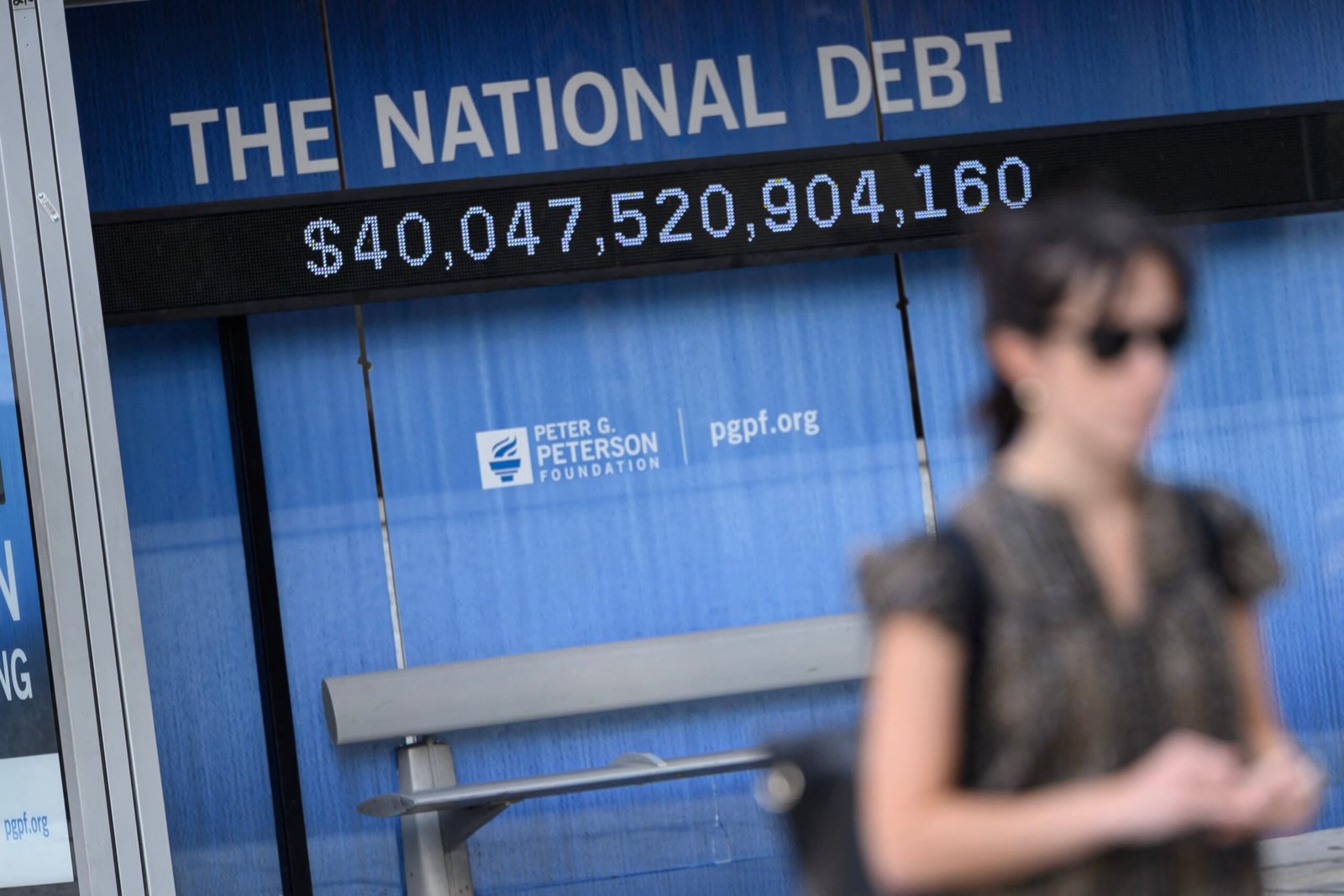
The figures cover the first full fiscal year of President Donald Trump’s second term and highlight the growing pressure on federal finances as the national debt exceeds $40 trillion.
Rising Debt Costs Add to Fiscal Pressure
Interest payments on the federal debt climbed to a record $1.36 trillion in fiscal 2026, an increase of $144 billion, or 12%, from the previous year.
Debt-service costs have become one of the largest components of federal spending, exceeded only by Social Security and combined spending on Medicare and Medicaid.
The increase underscores the growing financial burden of servicing the country’s expanding debt, leaving the government with less flexibility to fund other priorities without increasing borrowing or raising revenue.
Social Security and Medicare spending also contributed to the widening deficit, reflecting continued growth in expenditure on major social benefit programs.
Defense spending rose by 6% to $917 billion, an increase of $48 billion over the previous fiscal year. A Treasury official said the department could not determine how much of that increase was attributable to the war involving the United States, Israel and Iran that began earlier in the year.
Tariff Refunds Reduce Government Revenue
Tariff refunds also played a significant role in the increase in the budget shortfall.
Net tariff receipts declined by $22 billion after a Supreme Court ruling invalidated a substantial portion of the tariffs imposed by Trump during his first year back in office.
The ruling triggered approximately $145 billion in tariff refunds during fiscal 2026. As a result, net tariff income fell 11% to about $173 billion.
The refunds reduced the revenue the government collected from tariffs, adding pressure to federal finances even as overall receipts reached a record level.
Government Revenue and Spending Hit Records
Total federal receipts reached $5.40 trillion in fiscal 2026, an increase of $169 billion, or 3%, from $5.24 trillion in fiscal 2025.
However, government spending grew more quickly. Total outlays climbed to a record $7.40 trillion, up $386 billion, or 6%, from $7.01 trillion a year earlier.
The difference between revenue growth and spending growth helped push the annual deficit higher, demonstrating the challenge of balancing federal expenditure against incoming revenue.
The Treasury estimated that the deficit amounted to 6.2% of US gross domestic product in fiscal 2026, compared with an actual ratio of 5.8% in fiscal 2025. The department did not disclose the GDP estimate used in calculating the latest figure.
September Records a Smaller Deficit
In the final month of the fiscal year, the federal government recorded a deficit of $27 billion in September, a significant change from the $198 billion surplus recorded in September 2025.
Although the monthly figure was considerably smaller than the annual shortfall, it came as the government closed a fiscal year marked by record revenue, record spending and rising debt-servicing costs.
The latest figures highlight the competing pressures facing US policymakers: funding social programs and national defense, managing the consequences of tariff policy and containing the growing cost of federal borrowing.
With the national debt already above $40 trillion, the continued rise in interest payments is likely to remain a central concern in debates over the country’s long-term fiscal outlook.

